 How-to
Managing FASD Meltdowns in Public Spaces: A Calm Guide
Table of Contents
- Why FASD Meltdowns Happen in Public Spaces
- FASD Sensory Overload in Public: Spotting the Triggers Early
- Build a Public Outing Plan for a Child With FASD
- Step-by-Step: Responding When a Meltdown Starts
- What to Say During a Public Meltdown
- FASD Calming Strategies for Children in the Moment
- After the Meltdown: Recovery, Reflection, and Caregiver Support
- Frequently Asked Questions
Last Updated: October 21, 2026
Why FASD Meltdowns Happen in Public Spaces
A meltdown is not a tantrum. It is a brain-based overload response, and for a child with fetal alcohol spectrum disorder, a busy store or crowded bus can push that brain past its limit fast. At Harrison's Hope, we hear the same story from caregivers again and again: the outing was fine last week, and this week it fell apart in the cereal aisle.
That unpredictability is the hardest part.
How FASD Changes the Way a Child Experiences a Crowd
FASD is a lifelong disability that affects how the brain receives, processes, and responds to information. Many children with FASD struggle with sensory filtering, transitions, and impulse control. A crowded space piles on noise, lights, movement, and waiting, all at once.
Most parenting advice assumes a brain that can pause and reason in the moment. FASD meltdowns work differently.
The Mechanism Behind a Public Meltdown
To respond well, it helps to understand what is actually happening. In FASD, the brain often has difficulty with three things at once:
- Sensory gating: filtering out background noise, flickering lights, and the press of a crowd. Without efficient gating, every input competes for attention, and the nervous system floods.
- Processing speed and working memory: holding the plan in mind ("we are here for milk, then home") while managing distractions. When working memory is stretched, a small change, like a closed checkout lane, can feel like the plan collapsing.
- Arousal regulation: shifting from a high-energy state back to calm. A child may not have the internal brakes to downshift once the stress response starts.
Layer on a transition, a wait, or a hunger cue, and the brain reaches its ceiling. The meltdown is the body's alarm, not a choice.
FASD Sensory Overload in Public: Spotting the Triggers Early
FASD sensory overload in public usually builds before it erupts. The skill to learn is reading the buildup, not reacting to the crash. Common sensory triggers include:
- Noise: echoing malls, hand dryers, loudspeakers
- Lights: fluorescent flicker, bright displays
- Crowds: people bumping, queues, tight aisles
- Hunger and fatigue: a missed snack or a late nap lowers the threshold
- Transitions: leaving a preferred place, or being told "five more minutes"
The Warning Signs That Come Before the Meltdown
Early warning signs are your window to act. Watch for:
- Covering ears or eyes
- Repeating phrases or pacing
- Clinging or pulling away
- Faster breathing, flushed face
- Short, clipped answers or sudden silence
Responding early to signs of escalation is far easier than de-escalating a full meltdown. When you see two or more signs, act.
Build a Public Outing Plan for a Child With FASD
A public outing plan for a child with FASD is a short, written routine you follow before, during, and after any trip. It removes guesswork and gives the child predictability, which their brain needs. The plan should be tailored to the specific place, because a grocery store, a restaurant, a bus, and a park each load the senses differently.
A Simple Pre-Outing Checklist
- Pick a low-crowd time (early morning, weekday)
- Pack a comfort item and headphones
- Bring a snack and water
- Set a clear, short plan: "Store, then home"
- Use a visual schedule or picture list
- Agree on a quiet exit spot in case of overload
- Set a time limit and stick to it
Flexible expectations matter. If the child is already tired, shorten the trip or reschedule it. Prevention beats damage control every time.
Planning by Space: Shops, Restaurants, Transport, and Parks
Shops. Choose a smaller store or a quiet hour. Before entering, show a picture list of the three items you need. Inside, narrate the sequence briefly: "Milk, then bread, then car." Park near the exit so a quick retreat is possible. If the store is loud or crowded, use headphones from the moment you walk in, not after signs of distress.
Restaurants. Request a booth or a corner table away from the kitchen and speakers. Order for the child as soon as you sit down so hunger does not build. Bring a preferred quiet activity. Agree in advance on a signal for "too much," such as a hand squeeze, and be ready to ask for the bill early.
Transport. On buses or trains, sit near the door and avoid peak hours. A window seat with headphones can reduce stimulation. For car trips, keep a comfort item within reach and plan breaks on longer drives. If the child bolts, a plan for a safe meeting point matters more than the route.
Parks. Parks are open but unpredictable: other children, dogs, heat, and transitions from play to leaving. Set a visual timer for the last ten minutes and give two transition warnings. Choose a meeting spot (a specific bench) in case you are separated.
Transition Warnings and Visual Supports
Transitions are a common flashpoint. Give warnings at ten, five, and two minutes, using the same words each time. A visual timer or a picture card showing "park, then car" gives the child something concrete to hold onto when words are hard to process. Keep the schedule short: two or three steps, not a full itinerary. These structured cues help regulate the nervous system before anxiety escalates into the physical intensity of calming a panic attack.
The Backup Plan
Every outing plan needs an exit strategy. Identify a quiet spot (a side aisle, a parked car, a bench outside) before you go in. Decide in advance what you will abandon if overload starts: the errand can wait. Carry a small comfort kit with headphones, a snack, and a familiar item. If the child is prone to bolting, plan the safest route to the exit and keep the child within arm's reach near roads or crowds.
Step-by-Step: Responding When a Meltdown Starts
When a meltdown starts in public, your job is safety first, then calm. Here is the response plan we walk caregivers through.
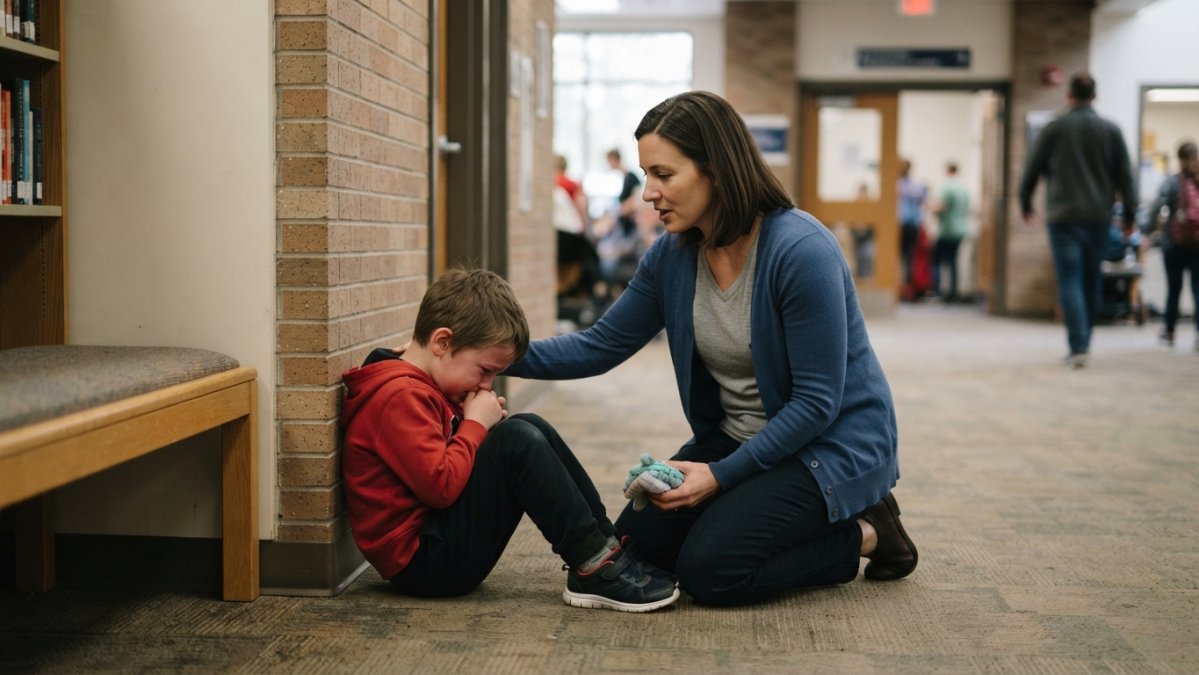
- Stay calm yourself. Breathe slowly. Your calm is contagious; so is panic.
- Check safety. Move the child away from roads, stairs, or hot surfaces.
- Reduce sensory input. Lower your voice, dim what you can, cut the crowd.
- Move to a quieter place. A quiet corner, a parked car, or a side aisle works.
- Reduce demands. Stop asking questions. Offer no choices for now.
- Use brief, clear words. Short phrases only: "I'm here." "You're safe."
- Wait. Give the nervous system time to come down.
Safety and Escalation Thresholds
Know your escalation thresholds in advance. If the child is at risk of running into traffic, hurting themselves or others, or if the meltdown lasts far longer than usual, remove them from the space entirely and seek help. Safety always outranks finishing the errand.
What to Say During a Public Meltdown
What to say during a public meltdown is less than you think. Fewer words, lower volume, and simple statements work best for a brain in overload. Try:
- "I'm here."
- "You're safe."
- "Let's go somewhere quiet."
- "I'll wait with you."
Avoid "calm down," "you're fine," or "stop it." These ask a flooded brain to do something it can't. Also skip lectures and questions. Save the conversation for later, when the child is regulated again.
FASD Calming Strategies for Children in the Moment
FASD calming strategies for children work best when they match the child's senses and are practiced before you need them. In the moment, try:
- Deep pressure: a firm hug if the child accepts it, or a weighted lap pad
- Breathing: "smell the flower, blow out the candle"
- Headphones: block the noise that's driving the overload
- Comfort item: a familiar blanket or toy
- Movement: slow rocking or a short walk
- Quiet space: remove triggers and let the environment do the work
Co-regulation is the goal. Your steady presence helps the child borrow your calm until their own returns.
After the Meltdown: Recovery, Reflection, and Caregiver Support
Recovery takes time. A child may be exhausted, tearful, or clingy for hours after. Skip the discipline and skip the debrief in the moment. Once everyone is calm, reflect gently: what triggered it, what helped, and what you'll change next time.
And look after yourself. Public meltdowns carry judgment and embarrassment, and that weight is real. You are not failing. You are parenting a child whose brain works differently.
Frequently Asked Questions
What should I do when a child with FASD has a meltdown in public?
Focus on safety and lowering stimulation first. Move the child away from noise, lights, and crowds to a quieter spot, reduce demands, and use short, calm phrases. Don't try to reason, lecture, or argue during the meltdown, because a child in sensory overload cannot process complex language. Keep your own voice slow and steady, offer a comfort item or headphones, and wait for the surge to pass. Most FASD meltdowns ease once the environment changes and the pressure to perform or comply is removed.
How can I tell whether a public meltdown is caused by sensory overload?
Look at what happened in the minutes before. FASD sensory overload in public often follows a build-up: covering ears, squinting, pulling away, repeating phrases, or getting irritable in a busy store. If the meltdown started after noise, bright lights, crowds, hunger, or fatigue, sensory overload is likely. A meltdown driven by being told no usually has a clearer trigger and a faster recovery once the demand is dropped. Tracking patterns in a simple notebook helps you spot the difference over time.
How can I prevent FASD-related meltdowns during outings?
Use a written public outing plan for a child with FASD. Go at quieter times, keep trips short, bring headphones, snacks, water, and a comfort item, and preview the outing with simple visual supports. Set flexible expectations and build in a quiet exit route before you arrive. Respond early to warning signs instead of waiting for escalation. Preparation does not remove every meltdown, but it lowers the number of triggers your child has to manage at once.
What should I say to bystanders when my child is having a meltdown?
Keep it brief and calm so your attention stays on your child. A short line such as "He has a disability and we're handling it, thank you" is usually enough. You do not owe strangers a medical explanation. If someone offers help, you can accept specific offers like holding a door. After the meltdown, give yourself a moment to reset. Harrison's Hope offers caregiver groups and workshops where parents practice these scripts and share what works.
Public meltdowns can make outings feel impossible, but a calm plan changes the picture. Harrison's Hope supports families with practical, FASD-informed tools, including caregiver workshops, one-on-one consultation, and peer support groups built on lived experience. Our team understands FASD instead of fighting it, and we help you build strategies that match your child's brain. Get started with Harrison's Hope and bring more peace to your family's everyday outings.