 blog
blog
Finding Peer Support for FASD Caregivers: A Guide
Table of Contents
- Why FASD Peer Support Changes Everything for Caregivers
- Types of Peer Support Groups for FASD Caregivers
- How to Find Local and Regional FASD Support Networks
- Government Disability Grants for FASD Families
- FASD Caregiver Burnout Resources and Respite Care
- What to Look For in a Peer Support Facilitator
- Conclusion: Building Your Support Network
- Frequently Asked Questions
Last Updated: October 4, 2026
Why FASD Peer Support Changes Everything for Caregivers
Finding peer support for FASD caregivers is one of the most practical steps a family can take, because Fetal Alcohol Spectrum Disorder is a neurodevelopmental condition most mainstream parenting advice does not address.
Peer support is not a soft add-on to professional care. It is where caregivers learn the real-world scripts, school advocacy language, and calm-down techniques that never make it into a clinical handout.
The Isolation Problem No One Talks About
Most caregivers describe the same slow drift into isolation.
That isolation has a cost. Many families say the emotional load, not the behavior itself, wears them down first.
"The caregivers' group made me feel understood for the first time."
That is the shift peer support creates. Not a cure, but a room where you are not the odd one out.
Types of Peer Support Groups for FASD Caregivers
Peer support for FASD caregivers comes in two main formats, and the right one depends on your schedule, comfort level, and how much structure you want.
| Format | Best For | Typical Structure | Main Trade-Off |
|---|---|---|---|
| In-person groups | Local connection, hands-on help | Monthly meetings, guest speakers | Limited by location and timing |
| Online communities | Rural families, flexible schedules | Forums, video calls, chat threads | Less personal, privacy care needed |
| Peer-led groups | Shared lived experience | Caregivers guide discussion | Varies in consistency |
| Facilitated groups | Structured, trauma-informed support | Trained facilitator sets agenda | May have waitlists |
In-Person Groups vs. Online Communities
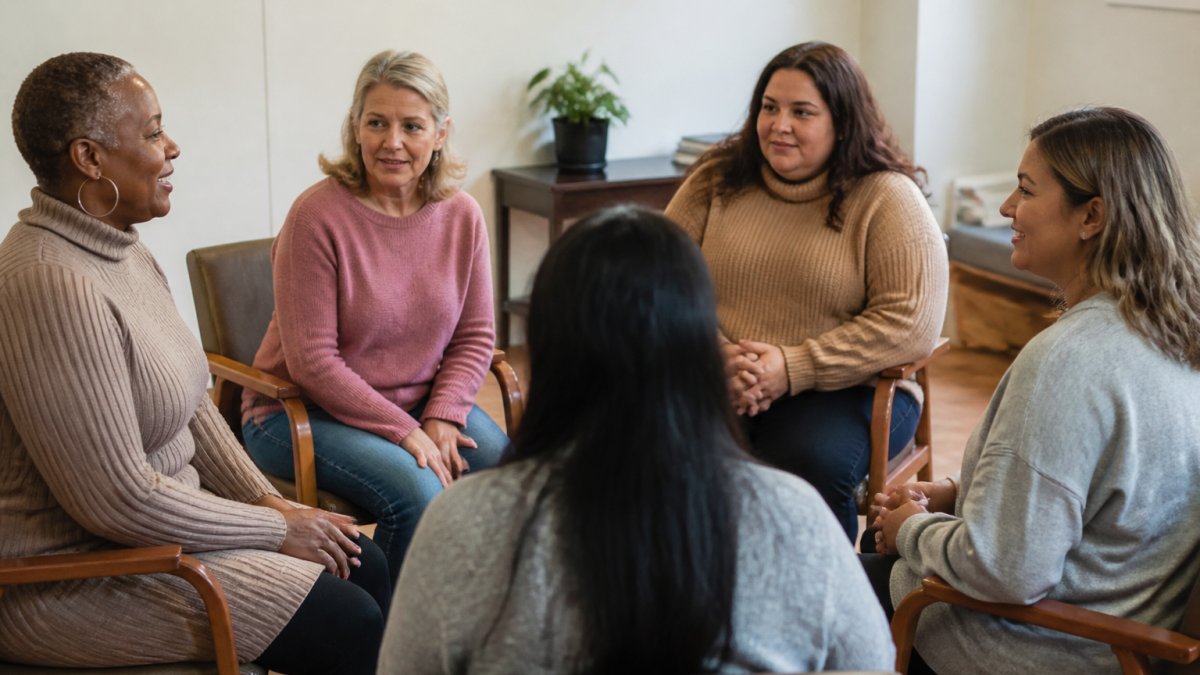
In-person groups win on trust: sharing a room, a coffee, and a laugh builds connection faster than any screen, and lets you swap local knowledge like which school liaison actually returns calls.
Online communities win on access. For families far from a city center, a moderated forum or video meetup may be the only regular contact with other FASD caregivers, but online spaces require more care around privacy and tone.
Peer-Led vs. Facilitated Groups
Peer-led groups are run by caregivers with lived experience. They feel informal and validating, and the conversation goes where the group needs it to go.
Facilitated groups bring in a trained facilitator who keeps discussion on track and can apply trauma-informed care practices. If your family is in crisis, a facilitated group often provides steadier ground.
How to Find Local and Regional FASD Support Networks
Start with networks that already exist near you rather than searching for a single perfect group. Regional FASD networks, children's treatment centers, and family support organizations often host caregiver circles that never appear in a general search.
A workable search sequence:
- Contact your regional FASD network or provincial family support body.
- Ask your child's school or pediatric team for caregiver group referrals.
- Check hospital and children's treatment center family resource pages.
- Join one national or provincial online caregiver community as a baseline.
- Ask a local group whether they know of a closer one.
Government health and social service departments also publish family support directories. For example, Public Health Agency of Canada information on Fetal Alcohol Spectrum Disorder outlines national resources, and provincial ministries list regional contacts you can call directly.
Why the Same Search Fails in Different Provinces
The biggest reason caregivers give up is searching the way they would for a pediatrician. FASD caregiver support is not organized that way, the entry point depends on your province:
- Provinces with a dedicated FASD network or coordinator route families through a regional coordinator who knows every caregiver circle in the area. Ask specifically for the "FASD coordinator" or "FASD network lead", not "family support."
- Provinces without a dedicated network fold FASD support into children's treatment centers, child development services, or general family resource programs. Here, the fastest route is usually the intake worker at your nearest children's treatment center.
- Rural and remote areas often have no in-person group at all. The realistic path is a provincial online group plus one regional contact who can connect you by phone.
If a first call goes nowhere, that is normal. Ask the person you reached: "Who else in the region works with FASD caregivers?" Front-line staff usually know the informal groups directories miss.
A Phone Script That Actually Gets a Referral
Vague requests get vague answers. Try this instead:
"I'm a caregiver for a child with an FASD diagnosis. I'm looking for a caregiver peer support group, not a group for the child. Do you run one, or can you tell me who does?"
Naming that distinction matters, because many organizations offer only child programming and will otherwise assume that is what you mean.
Finding Support When You Are Not the Parent
Most directories are built for parents, leaving grandparents, foster parents, kinship caregivers, and adult siblings searching in the wrong places. If you are a non-parental caregiver, add these to your search:
- Grandparent-specific groups through seniors' associations and community centers, which often run caregiver circles that welcome kinship arrangements.
- Foster and kinship caregiver associations, which frequently have their own peer networks separate from parent groups.
- Sibling support programs through young carer and sibling-focused organizations, which address a different emotional load than parenting.
When you call, ask directly: "Is this group open to grandparents and kinship caregivers, or is it parents only?" Some groups are parents-only by design, and knowing up front saves a difficult first meeting.
Avoid joining any group that asks for your child's full diagnostic file or medical records before you've attended a meeting. Legitimate groups ask for nothing more than a first name to start.
Keep a one-page log of every organization you contact, name, date, what they said, and who they referred you to. Caregivers who track their calls typically find a group in two or three hops instead of starting over each time.
Government Disability Grants for FASD Families
Government disability grants for FASD families are among the most underused supports, largely because the paperwork is confusing and eligibility varies by province.
Most families end up navigating a mix of:
- Federal disability savings and benefit programs
- Provincial disability assistance and child disability benefits
- Respite and family support funding through regional agencies
Because amounts, eligibility, and deadlines change, always confirm current details with the administering body before you apply. The Government of Canada disability benefits and savings information page is the right starting point, and provincial ministries handle the rest.
A common mistake is applying for one program and stopping there. Many families qualify for more than one, and applications often share the same documents, so the second and third are faster than the first.
FASD Caregiver Burnout Resources and Respite Care
FASD caregiver burnout resources matter because burnout builds quietly, showing up as shorter patience, skipped meals, and a growing feeling that nothing you do makes a difference.
Respite care is the most direct counter: a planned break, a few hours, an overnight, or a weekend, so you rest before you reach your limit rather than after.
What to look for in respite and burnout support:
- Respite providers trained in FASD and behavioral support
- Counseling or peer groups specifically for caregivers, not just the child
- Crisis lines and after-hours support for hard nights
If you are running on empty, reach out before you hit the wall. At Harrison's Hope, we empower caregivers with practical tools, advocacy training, and compassionate guidance to help their families thrive.
What to Look For in a Peer Support Facilitator
A good peer support facilitator has three things: lived or deep professional experience with FASD, training in trauma-informed care, and clear confidentiality boundaries. Without all three, a group can do more harm than good.
Vetting questions worth asking, and what a strong answer sounds like:
| Question | Weak answer | Strong answer |
|---|---|---|
| What is your experience with FASD specifically? | "I've worked with lots of special needs kids." | Names specific FASD training, years with FASD families, or lived experience. |
| How do you protect confidentiality? | "What's said here stays here." | Describes a written agreement, no-recording rule, and how member lists are stored. |
| What happens when a member is in crisis mid-meeting? | "We'd handle it." | Names a protocol: pause, one-on-one support, crisis line referral, follow-up. |
| Do you follow a code of conduct or facilitator training? | "Not formally." | Names the training body or the group's own written standards. |
| How do you handle disagreements between members? | "We're all adults." | Describes ground rules, a facilitator role in redirecting, and a process for concerns. |
The strongest groups are the ones where the facilitator talks less than the members. If one voice dominates every meeting, the group has quietly become a lecture.
Digital Safety and Anonymity in Online Groups
This is the gap most guides skip, and it matters because stigma is the top reason caregivers never join. Before you post anything, ask the facilitator:
- Are meetings recorded? If yes, who stores the recording, for how long, and can you opt out?
- Is there a no-screenshot rule? A written rule is stronger than a verbal one.
- How is the member list handled? It should not be shared outside the group or added to mailing lists without consent.
A practical rule: share your child's diagnosis and behaviors freely, but keep identifying details, school name, address, workplace, out of any written channel. What feels safe live can feel very different in a searchable thread.
Will This Group Still Fit You in Five Years?
Most caregiver groups are built around early childhood, but FASD is lifelong and your support needs shift as your child ages. Ask any group how it supports families through:
- The transition to adulthood, including adult services, guardianship and decision-making supports, and housing options.
- Long-term care navigation, which becomes the central concern for many families once school ends.
- Aging caregivers, including what happens to support when a parent or grandparent can no longer provide care.
A group that only discusses behavior strategies will leave you searching again at the worst possible time. The best groups run a transition-focused circle or maintain connections to adult-services navigators.
Support for Non-Parental Caregivers
Foster parents, grandparents, aunts, uncles, and adult siblings carry a different load than parents, and not every group is built for them. When vetting, ask whether members hold similar roles and whether discussion assumes a parental relationship. A group sharing your legal and emotional context serves you better; if none exists locally, a provincial online group for kinship or foster caregivers is often the closest match.
Before committing, attend two sessions as a guest. One meeting shows you the facilitator's style; two show you whether the group's culture is consistent, and whether you would actually reach out on a hard night.
Conclusion: Building Your Support Network
The hardest part of finding peer support for FASD caregivers is starting, because isolation convinces you no one will understand. They will. The right group, vetted carefully and matched to your family's stage, changes how you cope, advocate, and rest.
Harrison's Hope is a registered Canadian charity built to walk with families long term, from prevention education through to senior care.
Frequently Asked Questions
Why is peer support important for FASD caregivers?
FASD caregivers often face social isolation and judgment from people who don't understand the disorder. Peer support connects you with others who have lived experience, reducing the emotional weight of caregiving. Research consistently shows that caregiver burnout drops when parents have access to people who truly understand their daily reality. Groups also share practical coping strategies for aggressive behaviors, school advocacy, and system navigation that generic parenting advice rarely addresses.
How do I find local FASD caregiver support groups?
Start with provincial FASD networks and regional health authorities, which often maintain resource directories of peer-led and facilitated groups. Community health centers, family service agencies, and Indigenous friendship centers may also host caregiver circles. Harrison's Hope can point families toward supports in their area, including rural regions. If nothing local exists, online communities can fill the gap while you advocate for in-person options.
Are there online peer support communities for FASD parents?
Yes, several national and provincial organizations host online forums, Facebook groups, and virtual meetups for FASD caregivers. These are especially valuable for rural families and non-parental caregivers like grandparents or foster parents. When joining, check the group's privacy settings and moderation policies. A well-run online community should have clear confidentiality rules and active facilitators who keep discussions trauma-informed and respectful.
Do I need a referral to join an FASD support group?
Most peer support groups do not require a formal referral. You can usually contact the organization directly by phone or email and ask to join. Some facilitated groups connected to clinical programs may ask for a brief intake conversation to understand your situation and match you with the right group. If you're working with a social worker or FASD clinic, they can often connect you faster, but self-referral is almost always accepted.